AI is no longer a future concept in hiring. In 2026, the best recruitment teams are using it to reduce hiring delays, improve matching quality, and make talent…
Hiring in 2026 is no longer just about filling vacancies. It is about building a hiring engine that is faster, smarter, and more predictable. Companies that continue to rely only on manual sourcing, inconsistent screening, and slow coordination are already falling behind more agile competitors.
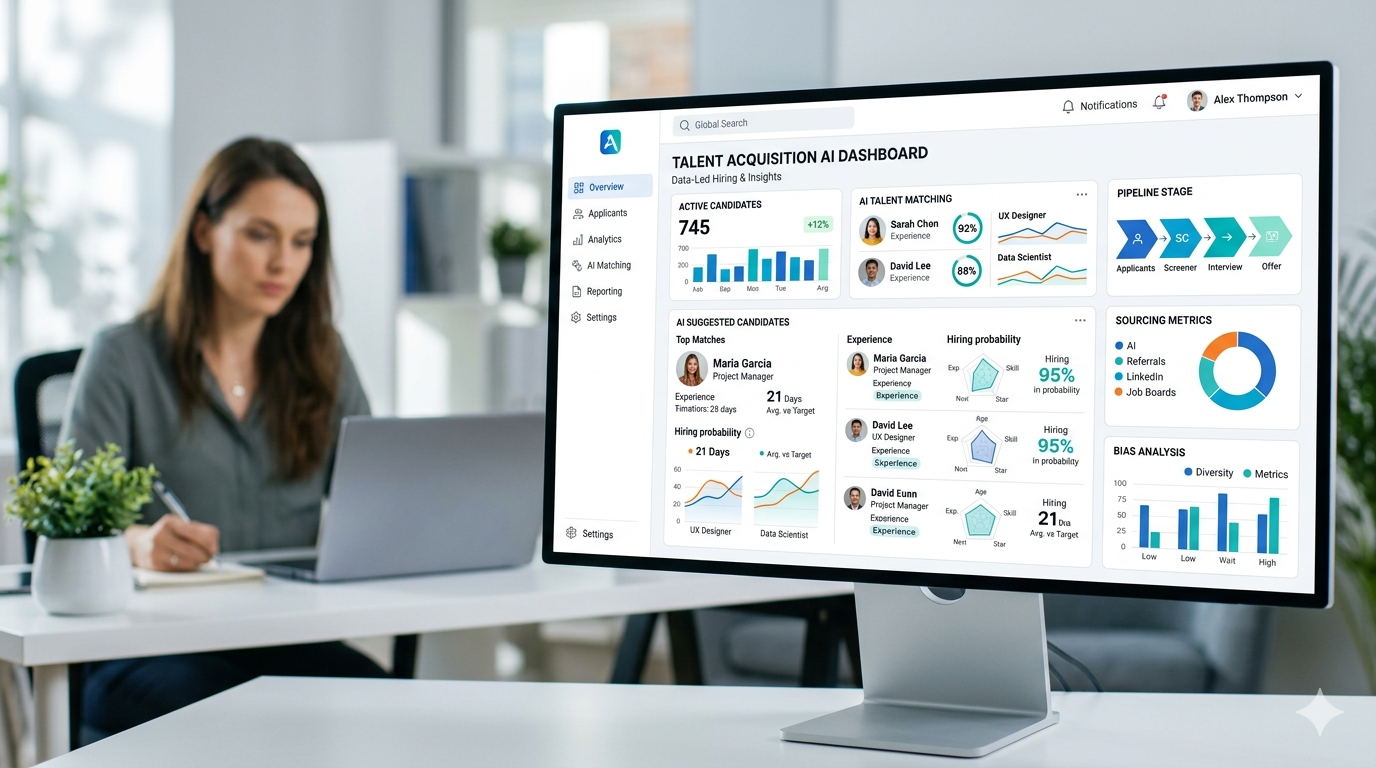
Artificial intelligence is changing that. From candidate sourcing and resume matching to workflow automation and hiring analytics, AI is helping recruitment teams improve speed, quality, and decision-making at every stage of the funnel.
Why AI recruitment matters now
The shift toward AI-powered recruitment is being driven by a simple business reality: companies need better hiring outcomes with less operational friction. Recent industry reporting shows AI is now being used widely across hiring functions, especially for sourcing, screening, and process automation.
This matters even more for high-growth businesses, GCCs, startups, and specialist teams hiring for technical or leadership roles. In these environments, hiring delays do not just affect HR metrics; they slow product delivery, business expansion, and revenue momentum.
What AI improves in recruitment
AI brings the most value when it supports recruiters instead of trying to replace them. The strongest teams use it to remove repetitive work, surface stronger-fit candidates faster, and make hiring pipelines more measurable.
Here are some of the biggest advantages:
Faster candidate sourcing across multiple channels.
Better matching based on skills and relevance, not only keyword overlap.
More efficient screening and shortlist building.
Improved hiring workflow automation, including scheduling and follow-ups.
Stronger forecasting and visibility into hiring bottlenecks.
The problem with traditional hiring models
Traditional recruitment often depends too heavily on manual effort. Recruiters spend hours searching profiles, filtering resumes, coordinating interviews, and following up with candidates, which reduces the time available for strategic conversations with clients and talent.
This also creates inconsistency. Two recruiters may interpret the same role differently, evaluate candidates with different benchmarks, and produce very different shortlists. AI-supported systems help standardize parts of the process so quality becomes more repeatable.
How modern recruitment firms are using AI
The most effective recruitment companies are combining human judgment with AI-enabled workflows. Instead of using AI as a content buzzword, they are applying it where it has direct operational value: better sourcing, faster shortlisting, improved communication, and stronger search visibility.
For firms serving GCCs, technology teams, and leadership hiring mandates, this creates a major edge. Faster access to relevant candidates and better-fit screening can reduce time-to-hire while improving confidence in hiring decisions.
What this means for employers
For employers, AI recruitment is not just about speed. It is about predictability. A strong hiring partner should be able to combine market intelligence, recruiter insight, and AI-assisted workflows to create a process that is more reliable from role intake to offer closure.
That means fewer irrelevant profiles, quicker turnaround on critical roles, and better alignment between hiring managers and recruiters. In a competitive market, these gains can directly influence business performance.
How HiredNext approaches hiring
At HiredNext, we believe recruitment works best when technology supports human expertise, not when it replaces it. AI can improve search, screening, and coordination, but strong hiring outcomes still depend on role clarity, market understanding, and recruiter judgment.
That is why modern recruitment is moving toward a blended model: AI for speed and structure, humans for evaluation, trust, and closure.
If your company is hiring for growth in 2026, this is the time to rethink how your hiring process works. The teams that combine recruitment expertise with AI-driven execution will be the ones that move faster and hire better.
If you want a recruitment partner that understands both talent strategy and modern hiring workflows, HiredNext can help.
Related HiredNext resources
- Executive Search & Leadership Hiring
- Career Services for Candidates
- How HiredNext Uses AI in Recruitment
- Taru Shikha — Founder, HiredNext